
- Email: unityhospital24x7@gmail.com
- Badarpur, New Delhi-110044
- Call: +91-9958749840
- Call: 011-69139900
Mon - Sun (24*7)

Treatment for Psoriasis
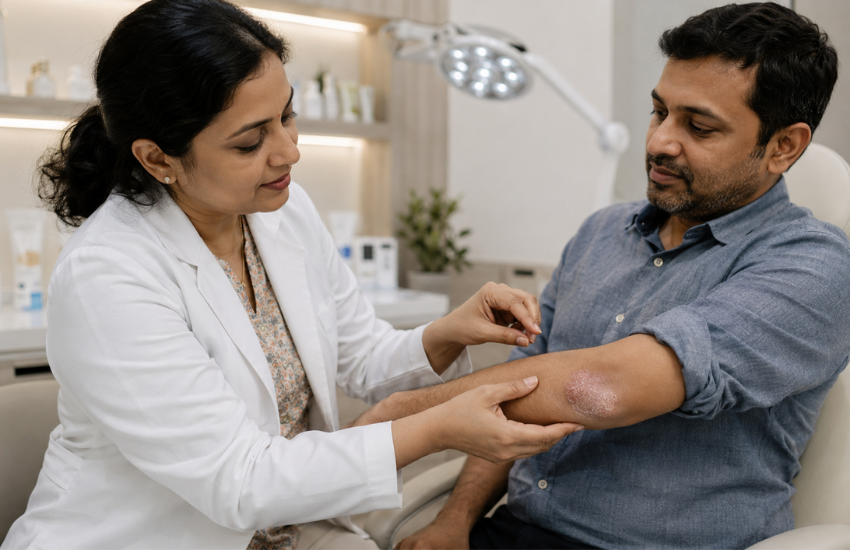
Treatment for Psoriasis
- Unity Hospital
Psoriasis is a chronic inflammatory skin condition that causes areas of the skin to become red, dry, thickened and covered with silvery or whitish scales. It can affect people of all ages and may occur on different parts of the body, including the scalp,
Psoriasis is a chronic inflammatory skin condition that causes areas of the skin to become red, dry, thickened and covered with silvery or whitish scales. It can affect people of all ages and may occur on different parts of the body, including the scalp, elbows, knees, hands, feet, trunk and other areas. In some patients, psoriasis may also affect the nails or joints.
The condition often follows a pattern of flare-ups and periods when symptoms become less noticeable. Triggers and severity can vary considerably from person to person. While psoriasis typically cannot be permanently cured, it can often be controlled effectively with appropriate medical treatment, skincare and long-term management.
Our dermatologists focus not only on improving visible skin symptoms but also on understanding the factors that contribute to flare-ups and helping patients develop a sustainable management plan. The aim is to reduce inflammation, control scaling and itching, prevent frequent flare-ups and improve the patient's overall quality of life.
Understanding Psoriasis
Psoriasis occurs when the immune system becomes overactive and causes skin cells to develop and accumulate more rapidly than normal. This results in areas of thickened, inflamed skin and characteristic scaling.
Psoriasis is not simply a dry-skin problem, and it is not contagious. It cannot be spread from one person to another through physical contact. However, because the affected skin can be highly visible, patients may sometimes experience embarrassment, self-consciousness or anxiety about their appearance.
The condition can also vary significantly in severity. Some people may have a few small patches that remain relatively stable, while others may develop extensive areas of inflammation that require more intensive treatment.
Common Symptoms of Psoriasis
The appearance of psoriasis depends on the type and location of the condition. Common symptoms may include:
- Red or inflamed patches of skin.
- Dry, thick or scaly areas.
- Silvery or whitish scales over affected skin.
- Itching, irritation or burning.
- Cracked skin that may sometimes bleed.
- Changes in the appearance or texture of the nails.
- Scalp scaling that may resemble severe dandruff.
- Pain or stiffness in the joints in patients who develop psoriatic arthritis.
Symptoms may improve for periods of time and then return during a flare-up. Identifying an individual's pattern of symptoms can help the dermatologist select an appropriate long-term treatment strategy.
Why Professional Diagnosis Is Important
Several skin conditions can cause redness, scaling and itching, and they may sometimes resemble psoriasis. Conditions such as eczema, fungal infections, seborrhoeic dermatitis and other inflammatory skin disorders may require different treatments.
A dermatologist examines the affected areas and considers the pattern, distribution and appearance of the lesions along with the patient's medical history. The nails, scalp and other areas of the body may also be assessed when appropriate.
An accurate diagnosis is particularly important because using an unsuitable treatment for a prolonged period may aggravate certain skin conditions or delay appropriate care.
Identifying Psoriasis Triggers
Psoriasis can flare up in response to a variety of factors. Triggers are not the same for everyone, so identifying individual patterns can be an important part of long-term management.
Potential triggers may include:
- Physical or emotional stress.
- Skin injuries, cuts, burns or repeated friction.
- Certain infections.
- Changes in weather or very dry conditions.
- Smoking or excessive alcohol consumption.
- Certain medications.
- Poorly controlled lifestyle factors.
- Discontinuation of some treatments without medical guidance.
Keeping track of flare-ups and potential triggers can help patients and their dermatologist identify patterns and make practical changes to reduce avoidable aggravating factors.
Topical Treatment for Psoriasis
For mild to moderate psoriasis, topical treatment is often an important part of management. Depending on the type and location of psoriasis, dermatologists may recommend prescription creams, ointments, lotions, gels or other medicated preparations.
Treatment may be directed at reducing inflammation, slowing excessive skin-cell growth, controlling scaling or relieving itching and dryness. The choice of medication depends on the affected area and severity of the condition.
Certain topical medications are particularly suitable for short-term use or specific body areas, while others may be used as part of a longer-term maintenance strategy. Patients should follow the prescribed instructions carefully, especially when applying medication to sensitive areas such as the face, skin folds or genital region.
Managing Scalp Psoriasis
Scalp psoriasis can cause significant scaling and itching and may sometimes extend beyond the hairline. It can be mistaken for ordinary dandruff, although psoriasis generally produces thicker, more persistent scaling.
Treatment may involve medicated shampoos, topical preparations, solutions, foams or other prescription treatments depending on the severity of the condition.
Because hair can make application of topical medication difficult, the formulation selected by the dermatologist can be important. Patients are also advised to avoid aggressively scratching or picking at scalp lesions, as trauma to the skin may worsen inflammation.
Treatment for Moderate to Severe Psoriasis
When psoriasis affects larger areas of the body, is difficult to control with topical treatments or significantly affects quality of life, dermatologists may consider additional treatment options.
Depending on the individual case, treatment may include phototherapy, oral medications or injectable systemic therapies. These treatments work in different ways to control the inflammatory processes responsible for psoriasis.
Systemic treatment requires appropriate medical assessment and monitoring. The dermatologist considers the patient's overall health, other medications, treatment history and the severity and location of psoriasis before recommending an appropriate option.
Phototherapy
Phototherapy uses controlled exposure to specific wavelengths of ultraviolet light to help reduce inflammation and improve psoriasis in selected patients.
It may be considered when topical treatment is insufficient or when psoriasis affects multiple areas of the body. Phototherapy is administered according to a controlled treatment schedule rather than through unprotected sun exposure.
The number and frequency of sessions depend on the patient's condition and response to treatment. Regular follow-up is important to monitor improvement and minimise potential treatment-related complications.
Systemic and Advanced Treatments
For patients with moderate to severe psoriasis, or psoriasis that has not responded adequately to other treatments, systemic medications may be considered.
These treatments can include oral medicines and biologic or other targeted therapies. They work by modifying specific immune pathways involved in psoriasis and may provide significant improvement for appropriately selected patients.
Because systemic treatments can affect the immune system or other aspects of health, they should be prescribed and monitored by an experienced dermatologist. The doctor may recommend appropriate examinations or investigations before and during treatment.
Psoriasis and Joint Symptoms
Psoriasis can sometimes be associated with inflammation of the joints, known as psoriatic arthritis. Symptoms may include persistent joint pain, swelling, stiffness or reduced movement.
Patients with psoriasis should inform their dermatologist if they experience new or persistent joint symptoms. Early recognition and appropriate management can be important in reducing the risk of long-term joint problems.
Where necessary, dermatological care may be coordinated with other medical specialists to provide comprehensive management.
Skincare for Psoriasis
A consistent skincare routine can support medical treatment and help reduce dryness and irritation. Regular moisturisation is particularly important because dry skin can worsen discomfort and may contribute to cracking and irritation.
Patients may benefit from:
- Using gentle, fragrance-free cleansers where appropriate.
- Applying moisturiser regularly, particularly after bathing.
- Avoiding excessively hot showers or baths.
- Avoiding harsh scrubs and aggressive exfoliation.
- Keeping the skin adequately hydrated.
- Protecting the skin from unnecessary injury and irritation.
- Following prescribed topical treatments consistently.
Moisturising does not replace medical treatment, but it can help improve the comfort and condition of the skin.
Stress and Lifestyle Management
Stress is a commonly reported trigger for psoriasis flare-ups. While it may not always be possible to eliminate stress, developing healthy ways of managing it may support overall disease control.
Adequate sleep, regular physical activity, a balanced diet and avoidance of smoking can contribute to general health and may be beneficial as part of a broader psoriasis management plan.
Patients should also be cautious about claims that particular diets, supplements or alternative treatments can cure psoriasis. Such approaches may not be appropriate for everyone, and any supplement or major dietary change should be discussed with a healthcare professional.
Managing Flare-Ups
During a psoriasis flare-up, the priority is to bring inflammation under control and relieve symptoms. Patients should follow the treatment plan provided by their dermatologist rather than repeatedly changing products or stopping prescribed treatment as soon as the skin begins to improve.
If flare-ups become more frequent, more extensive or increasingly difficult to control, the treatment plan may need to be reassessed. Adjustments can be made based on the patient's response and any changes in the condition.
A long-term approach may include both active treatment during flare-ups and maintenance treatment during periods when the skin appears relatively clear.
Long-Term Psoriasis Management
Psoriasis is generally a long-term condition, so successful management involves more than treating individual flare-ups. Our approach focuses on establishing a treatment strategy that can be adapted over time as the condition changes.
Some patients may experience long periods of remission, while others may have more persistent symptoms. Treatment can therefore be adjusted according to disease severity, lifestyle, treatment response and the patient's individual goals.
Regular dermatological follow-up allows the doctor to monitor the condition, assess treatment effectiveness and identify complications or associated problems when appropriate.
Realistic Expectations From Treatment
The goal of psoriasis treatment is usually to achieve good control of the condition and maintain the skin as clear and comfortable as possible. Complete permanent elimination of psoriasis may not be possible, and periods of recurrence can occur even after successful treatment.
However, modern treatment options can provide substantial improvement for many patients. With an appropriate combination of medical treatment, skincare, trigger management and follow-up, the frequency and severity of flare-ups can often be reduced.
Patients are encouraged to discuss their expectations openly with their dermatologist so that treatment goals can be established realistically.
When Should You See a Dermatologist?
A dermatological consultation is recommended if you develop persistent red, scaly or itchy patches that do not improve with routine skincare. You should also seek professional evaluation if symptoms are rapidly spreading, causing significant discomfort, affecting the scalp or nails, or interfering with daily activities.
Patients who already have psoriasis should seek medical advice if their usual treatment is no longer controlling symptoms, flare-ups are becoming more frequent or they develop joint pain, swelling or stiffness.
Early assessment can help confirm the diagnosis and ensure that treatment is appropriate for the severity and type of psoriasis.
Personalised Care for Psoriasis
Every patient's psoriasis is different. The location, extent, severity, triggers, previous treatment response and impact on quality of life all influence the management approach.
Our dermatologists work closely with patients to create personalised treatment plans that may include topical medications, phototherapy, oral or injectable therapies, skincare recommendations and lifestyle adjustments. The plan can be modified over time according to the patient's response.
The objective is to provide effective disease control while helping patients understand their condition and feel confident managing it in the long term.
Conclusion
Psoriasis is a chronic condition that can affect both the skin and a patient's emotional well-being. Although there is currently no guaranteed permanent cure, effective treatment can significantly reduce inflammation, scaling, itching and visible lesions and can help patients maintain longer periods of control.
With an accurate diagnosis, personalised medical treatment, appropriate skincare, awareness of individual triggers and regular follow-up, psoriasis can often be managed successfully. Our goal is to help patients achieve better control of their symptoms, reduce the impact of flare-ups and develop a practical long-term approach that supports healthier skin and an improved quality of life.