- Email: unityhospital24x7@gmail.com
- Badarpur, New Delhi-110044
- Call: +91-9958749840
- Call: 011-69139900
Mon - Sun (24*7)

Paediatric ICU
Paediatric ICU
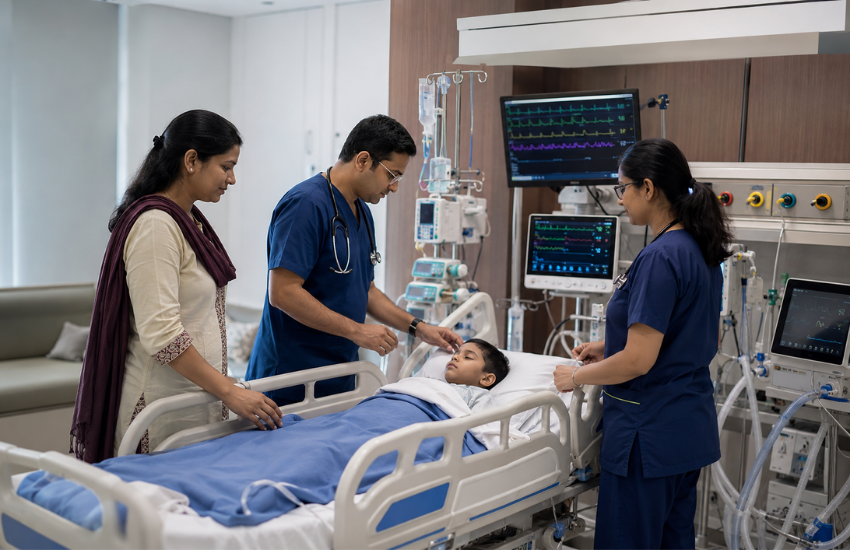
The Paediatric Intensive Care Unit (PICU) at Unity Hospital provides specialised, round-the-clock critical care for infants, children, and adolescents facing serious illnesses, injuries, or complications following surgery. Caring for a critically ill child requires a distinct set of skills, equipment, and emotional sensitivity that differs significantly from adult intensive care, and our PICU is purpose-built to meet these unique needs, combining advanced medical technology with a warm, family-centred approach to care.
The Paediatric Intensive Care Unit (PICU) at Unity Hospital provides specialised, round-the-clock critical care for infants, children, and adolescents facing serious illnesses, injuries, or complications following surgery. Caring for a critically ill child requires a distinct set of skills, equipment, and emotional sensitivity that differs significantly from adult intensive care, and our PICU is purpose-built to meet these unique needs, combining advanced medical technology with a warm, family-centred approach to care.
Our PICU is staffed by a dedicated team of paediatric intensivists, specially trained paediatric nurses, respiratory therapists, and support staff who are experienced in managing the full spectrum of critical illness in children, from newborns through teenagers. The unit operates with continuous physician and nursing coverage, ensuring that a critically ill child receives immediate attention and expert decision-making at any hour of the day or night. This constant vigilance is essential in paediatric critical care, where a child's condition can change rapidly and early intervention often makes the difference between a full recovery and a prolonged, complicated illness.
We admit and manage children with a wide range of critical conditions, including severe respiratory illnesses such as pneumonia, bronchiolitis, and status asthmaticus that require advanced respiratory support or mechanical ventilation; septic shock and severe infections requiring aggressive fluid resuscitation and antibiotic therapy; diabetic ketoacidosis and other metabolic emergencies; severe trauma and post-surgical recovery following major operations; neurological emergencies including seizures, encephalitis, and traumatic brain injury; and cardiac conditions requiring close haemodynamic monitoring. Children recovering from major surgeries performed at Unity Hospital, including complex abdominal, orthopaedic, or neurosurgical procedures, are also closely monitored in our PICU during the critical post-operative period to ensure a safe and stable recovery.
Our unit is equipped with advanced monitoring and life-support technology specifically designed and calibrated for paediatric and adolescent patients, recognising that children are not simply small adults and require equipment, dosing, and treatment protocols tailored precisely to their age, weight, and physiological differences. This includes paediatric ventilators capable of providing precise, gentle respiratory support for patients ranging from premature infants to teenagers, continuous cardiac and vital sign monitoring, advanced vascular access capabilities for critically ill children with difficult venous access, and point-of-care diagnostic testing that allows for rapid clinical decision-making without delays.
One of the defining features of paediatric critical care is the central role that families play in a child's recovery, and our PICU is designed around this understanding. We maintain an open visitation policy that allows parents to remain close to their child throughout their stay, recognising the emotional comfort and reassurance that parental presence provides to a frightened or unwell child. Our nursing staff and physicians take time to explain a child's condition, treatment plan, and progress in clear, compassionate language, ensuring that parents are true partners in the care process rather than passive observers during an already stressful experience.
Psychological and emotional support extends beyond the child to the entire family unit. Having a child in intensive care is among the most stressful experiences a parent can face, and our team is trained to recognise and address the anxiety, fear, and exhaustion that families often experience. We provide access to counselling support, clear and regular updates on treatment progress, and guidance on how families can best support their child both during the hospital stay and throughout the recovery process at home.
Our PICU works in close coordination with every other department at Unity Hospital, ensuring seamless transitions of care for children who require intensive support following surgery, complicated deliveries, or the escalation of illness from our general paediatric ward. This integrated approach means that a child who deteriorates on the general ward can be rapidly transferred to intensive care, and conversely, a child who stabilises in the PICU can be smoothly stepped down to a lower level of care as they recover, without unnecessary delays or gaps in communication between teams.
Infection control within our PICU follows stringent protocols specifically designed to protect vulnerable paediatric patients, whose immune systems may already be compromised by illness. Strict hand hygiene practices, controlled visitor access, and careful environmental management all contribute to minimising the risk of hospital-acquired infections, an especially important consideration for critically ill children who may require extended stays.
Discharge planning from our PICU is a carefully coordinated process, ensuring that children transition safely from intensive care, whether to a general ward for continued recovery or directly home with appropriate follow-up arrangements in place. Our team works closely with families to ensure they understand ongoing care requirements, medication schedules, warning signs to watch for, and follow-up appointments, providing the confidence and knowledge needed to support their child's continued recovery after leaving the hospital.
Our multidisciplinary approach to paediatric critical care means that specialists from paediatrics, surgery, anaesthesia, and, when required, neonatology work together seamlessly around a single child's bedside, ensuring that every aspect of a complex case is addressed by the right expertise at the right time. Regular case reviews and clinical rounds allow our team to continuously reassess treatment plans as a child's condition evolves, ensuring that care remains responsive and tailored to the individual rather than following a rigid, one-size-fits-all protocol.
Pain management is treated as a priority throughout a child's stay in our PICU, with our team using age-appropriate assessment tools and treatment protocols to ensure that discomfort is recognised and addressed promptly, even in infants and young children who cannot verbally describe their pain. This attention to comfort, alongside aggressive treatment of the underlying illness, reflects our belief that a child's overall experience during a critical illness matters just as much as the clinical outcome.
Nutritional support is another important component of care in our PICU, with dietitians working closely with the medical team to ensure that critically ill children receive appropriate nutrition to support healing and recovery, whether through oral feeding, nasogastric tube feeding, or intravenous nutrition when a child is unable to eat normally. This careful attention to nutrition, alongside meticulous medical management, supports faster recovery and helps prevent complications during extended hospital stays.
At Unity Hospital, we understand that no parent ever expects to see their child in an intensive care unit, and we are committed to making an incredibly difficult experience as manageable as possible through expert medical care, clear communication, and genuine compassion. Our Paediatric ICU team combines clinical excellence with heartfelt dedication to give every critically ill child the very best chance at a full and healthy recovery.