
- Email: unityhospital24x7@gmail.com
- Badarpur, New Delhi-110044
- Call: +91-9958749840
- Call: 011-69139900
Mon - Sun (24*7)

Kidney Stone Surgery
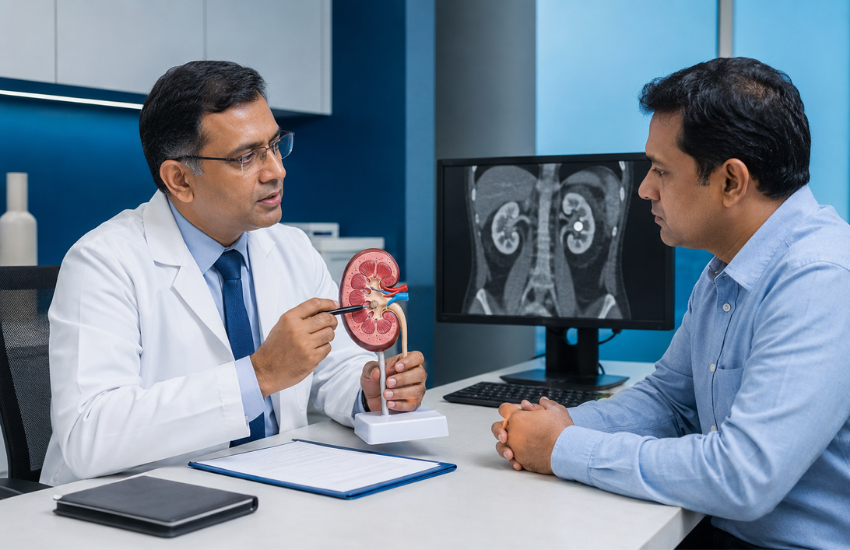
Kidney Stone Surgery
- Unity Hospital
Kidney stones are a common condition that can cause sudden and severe pain and, in some cases, may interfere with the normal flow of urine. While smaller stones can sometimes pass naturally without surgery, larger stones or stones that cause obstruction,
Kidney stones are a common condition that can cause sudden and severe pain and, in some cases, may interfere with the normal flow of urine. While smaller stones can sometimes pass naturally without surgery, larger stones or stones that cause obstruction, persistent symptoms, infection, or other complications may require active treatment.
Our surgical team provides comprehensive evaluation and treatment for kidney and urinary tract stones, using appropriate medical, endoscopic, and surgical techniques according to the individual patient's condition. The treatment approach is determined by factors such as the size, number, and location of the stones, the degree of urinary obstruction, the presence of infection, the patient's symptoms, and overall health.
Our goal is to remove or facilitate the passage of stones effectively while minimising unnecessary discomfort and supporting a safe and timely recovery.
Understanding Kidney Stones
Kidney stones are hard deposits that form when certain minerals and salts in the urine become concentrated and crystallise. They can remain within the kidney or travel into the ureter, the tube that carries urine from the kidney to the bladder.
Very small stones may pass through the urinary tract naturally, sometimes with medication and adequate fluid intake. Larger stones may become lodged within the urinary tract and prevent normal urine flow. This can result in significant pain and may require a procedure to break up or remove the stone.
Common Symptoms
Symptoms vary depending on the size and location of the stone. A stone passing through the urinary tract may cause severe pain, often beginning in the side or back and potentially spreading toward the lower abdomen or groin. The pain may come in waves and can sometimes be accompanied by nausea or vomiting.
Other symptoms may include blood in the urine, burning or discomfort during urination, increased urinary frequency, or difficulty passing urine. Some stones may cause no symptoms until they obstruct urine flow or are detected incidentally during an imaging examination.
Fever or chills in a patient with suspected urinary obstruction may indicate an infection and require urgent medical assessment.
Diagnosis and Imaging
Accurate diagnosis is an important part of kidney stone treatment. Our team begins with a detailed assessment of the patient's symptoms, medical history, previous history of kidney stones, medications, and overall health.
Appropriate investigations may include urine and blood tests as well as imaging studies. Ultrasound, X-ray, or CT imaging may be recommended depending on the clinical situation. Imaging helps determine the exact location, size, and number of stones and identifies whether there is obstruction or other associated problems.
This information allows our surgeons to determine whether the stone is likely to pass naturally or whether active intervention is required.
Treatment for Smaller Stones
Not every kidney stone requires surgery. Smaller stones that are not causing significant obstruction or complications may be managed conservatively, depending on the patient's condition.
Treatment may involve appropriate fluid intake, pain management, and medication that may help facilitate stone passage in selected cases. Patients are monitored to ensure that the stone passes and that kidney function and urinary drainage remain satisfactory.
Follow-up imaging or other investigations may be recommended when necessary to confirm that the stone has cleared.
When Surgical Treatment Is Required
Active stone removal may be recommended when a stone is too large to pass naturally, causes persistent or severe pain, obstructs urine flow, contributes to recurrent urinary problems, or is associated with other complications.
Surgical intervention may also be considered when a stone remains in place despite conservative treatment or when its size and location make spontaneous passage unlikely.
The choice of procedure depends on the individual stone characteristics and the patient's overall clinical condition. Our surgeons select the least invasive appropriate technique while ensuring that the treatment is effective and safe.
Modern Stone Removal Techniques
Depending on the location and size of the stone, several minimally invasive techniques may be considered. These can include endoscopic procedures in which specialised instruments are passed through the natural urinary passage to reach and treat the stone.
In suitable cases, energy may be used to fragment the stone into smaller pieces so that the fragments can be removed or pass naturally. Other procedures may involve accessing the kidney through a small incision to remove larger or more complex stones.
The specific technique is selected after reviewing the imaging findings and considering factors such as stone burden, location, anatomy, previous procedures, and the patient's general health.
Treatment of Obstructing or Complicated Stones
Some kidney stones can cause significant obstruction of the urinary tract. If obstruction occurs together with infection, the situation can become urgent because infected, blocked urine can lead to serious complications.
In such circumstances, the immediate priority may be to establish adequate drainage of the urinary system and control the infection. Definitive stone treatment may be performed at the appropriate time once the patient is stabilised.
Our team evaluates these cases carefully and coordinates surgical, anaesthesia, diagnostic, and medical support as required to provide timely and appropriate care.
Recovery After Stone Surgery
Recovery depends on the type of procedure performed, the size and complexity of the stones, and the patient's overall health. Many minimally invasive stone procedures allow patients to resume normal activities relatively quickly, although recovery times vary.
Patients receive specific instructions regarding medication, hydration, physical activity, diet, and follow-up. Some procedures may involve temporary placement of a urinary stent to maintain drainage while the urinary tract heals. If a stent is required, patients are informed about its purpose, expected symptoms, and the planned timing of removal.
Our team monitors recovery and provides guidance to help ensure that the urinary system is functioning appropriately after treatment.
Preventing Future Kidney Stones
Removing an existing stone is only one part of effective kidney stone care. Patients who have developed one stone may have an increased risk of developing others in the future, depending on the underlying cause.
We therefore provide guidance on measures that may help reduce the likelihood of recurrence. Adequate hydration is an important part of prevention for many patients. Dietary recommendations may also be provided based on the type of stone, urine findings, medical history, and individual risk factors.
When appropriate, analysis of a recovered stone and additional urine or blood investigations may help identify factors contributing to stone formation. This information can allow dietary and medical preventive measures to be tailored more specifically to the individual patient.
Follow-Up and Long-Term Care
Follow-up is important after kidney stone treatment to confirm that the stone has been adequately cleared and to monitor for recurrence. Depending on the patient's condition, follow-up may include repeat imaging, urine testing, blood tests, or assessment of kidney function.
Patients are encouraged to seek medical attention if they develop recurrent severe pain, fever, chills, difficulty passing urine, persistent vomiting, or other concerning urinary symptoms.
Comprehensive Kidney Stone Care
Our approach to kidney stone treatment combines accurate diagnosis, appropriate imaging, modern minimally invasive techniques, and individualised follow-up. Whether a stone can be managed conservatively or requires surgical removal, our team aims to select the most appropriate treatment based on the patient's specific circumstances.
From the initial assessment and imaging through stone treatment, recovery, prevention advice, and long-term monitoring, we provide coordinated care focused on effective stone clearance, preservation of kidney and urinary function, minimisation of unnecessary surgical trauma, and a safe return to normal activities.