
- Email: unityhospital24x7@gmail.com
- Badarpur, New Delhi-110044
- Call: +91-9958749840
- Call: 011-69139900
Mon - Sun (24*7)

Laser Treatment for Moles and Skin Lesions
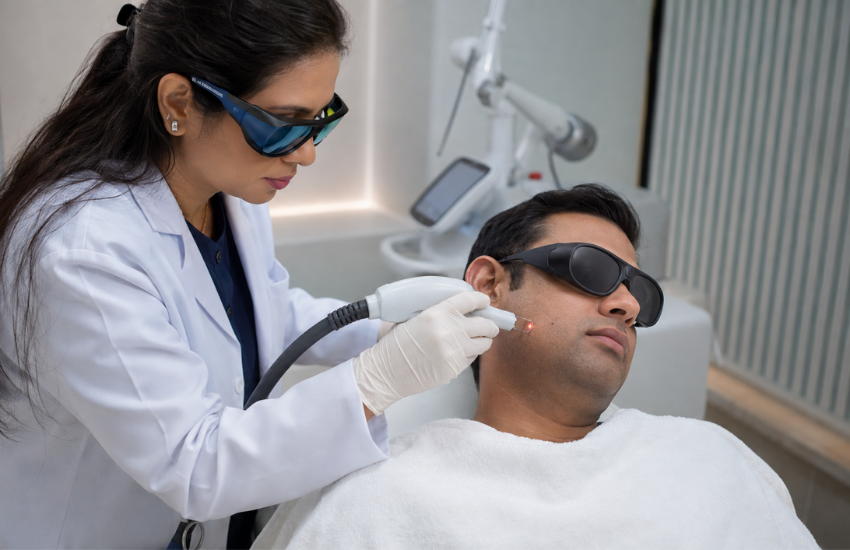
Laser Treatment for Moles and Skin Lesions
- Unity Hospital
Laser treatment has become an increasingly popular option for managing selected moles and benign skin lesions, particularly for patients who are concerned about their appearance, location or repeated irritation. Modern laser technology allows dermatologis
Laser treatment has become an increasingly popular option for managing selected moles and benign skin lesions, particularly for patients who are concerned about their appearance, location or repeated irritation. Modern laser technology allows dermatologists to target specific areas of the skin with considerable precision while limiting unnecessary damage to the surrounding tissue.
However, not every mole or skin lesion is appropriate for laser treatment. A careful dermatological assessment is an essential first step to determine the nature of the lesion and whether laser treatment is suitable. In some cases, surgical removal or another treatment may be more appropriate, particularly when a lesion requires complete removal or further laboratory examination.
Our dermatologists assess each lesion individually and discuss the available options with the patient, including the expected outcome, possible risks, healing process and likelihood of recurrence.
What Are Moles and Benign Skin Lesions?
Moles are common skin growths that can vary in colour, size, shape and texture. They may be flat or raised and can occur on almost any part of the body. Other benign skin lesions may include certain types of pigmentation, small growths and other non-cancerous abnormalities of the skin.
Many of these lesions are harmless and do not require treatment. However, patients may choose to have a benign lesion treated because it is cosmetically noticeable, catches on clothing or jewellery, becomes irritated by shaving, or is located in an area where it is repeatedly rubbed or injured.
Before any cosmetic procedure, the dermatologist determines whether the lesion has characteristics consistent with a benign condition and whether laser treatment is an appropriate option.
Why Assessment Is Important Before Laser Treatment
A mole or skin lesion should not be removed purely on the basis of its appearance without appropriate evaluation. Some lesions may require closer examination, monitoring or removal by a method that allows the tissue to be assessed in a laboratory.
During the consultation, the dermatologist evaluates features such as:
- The colour and pigmentation of the lesion.
- Its size, shape and borders.
- Whether it is flat or raised.
- Its location and depth.
- How long it has been present.
- Whether it has changed in appearance.
- Any history of bleeding, itching, pain or repeated irritation.
- The patient's skin type and previous history of skin problems.
If a lesion appears suspicious or requires diagnostic confirmation, laser treatment may not be recommended. In such situations, the dermatologist may suggest another form of removal or further investigation.
How Laser Treatment Works
Laser treatment uses concentrated light energy to target specific structures within the lesion. Depending on the type of lesion and the technology being used, the laser may target pigment, blood vessels or superficial tissue.
The objective is to treat the affected area as precisely as possible while preserving the surrounding healthy skin. The exact laser technology and treatment settings are selected according to the characteristics of the lesion and the patient's skin.
Because different lesions respond differently to laser energy, treatment must be customised rather than using the same laser settings for every patient.
The Laser Treatment Procedure
The procedure is generally performed in a dermatology clinic. Before treatment begins, the area is cleaned and prepared. Local anaesthesia or a topical numbing method may be used when appropriate to make the procedure more comfortable.
The dermatologist then applies the selected laser to the lesion using carefully controlled energy. The duration of the procedure depends on the size, number and location of the lesions being treated.
For small lesions, treatment can often be completed relatively quickly. Patients may experience sensations such as warmth, mild stinging or pressure during the procedure, although the use of appropriate anaesthesia can help minimise discomfort.
Once treatment is complete, the dermatologist provides instructions for caring for the treated area during the healing period.
Benefits of Laser Treatment
Laser treatment may offer several advantages for appropriately selected lesions.
Potential benefits include:
- Precise treatment of the targeted area.
- Minimal disruption to surrounding skin.
- A relatively quick procedure for suitable small lesions.
- Limited downtime compared with some surgical procedures.
- Reduced need for extensive incisions in selected cases.
- The possibility of improving the appearance of certain superficial lesions.
- Treatment that can often be performed on an outpatient basis.
The suitability and expected benefits depend on the specific lesion. Laser treatment should therefore be considered a specialised treatment option rather than a universal replacement for surgical removal.
Laser Treatment for Cosmetic Concerns
A common reason patients seek treatment is dissatisfaction with the appearance of a visible mole or skin lesion. Lesions on the face, neck, hands or other exposed areas may attract attention and affect a person's confidence.
For suitable benign lesions, laser treatment may help reduce their visibility and create a more even appearance of the surrounding skin. The expected degree of improvement depends on the lesion's depth, pigmentation, size and response to treatment.
Our dermatologists discuss realistic expectations before treatment so that patients understand whether the goal is complete removal, significant reduction or improvement in appearance.
Laser Treatment for Irritating Lesions
Some benign lesions may repeatedly catch on clothing, jewellery or accessories or become irritated during shaving or other daily activities. In these situations, removal may be considered for comfort as well as cosmetic reasons.
The dermatologist assesses whether laser treatment is appropriate based on the lesion's location, size, thickness and characteristics. If another treatment would provide a safer or more predictable result, that option may be recommended instead.
Recovery and Downtime
One of the reasons patients consider laser treatment is the relatively limited downtime associated with selected procedures. Immediately after treatment, the skin may appear red, swollen or mildly irritated. Some treated areas may develop a crust or temporary change in pigmentation as the skin heals.
The recovery period varies according to the type and depth of treatment. Small superficial lesions may heal relatively quickly, while deeper or more extensive treatment may require a longer recovery period.
Patients should avoid picking or scratching the treated area and should follow the dermatologist's wound-care and skincare instructions carefully.
Aftercare Following Laser Treatment
Proper aftercare is an important part of achieving a good result and reducing the risk of complications.
Patients may be advised to:
- Keep the treated area clean according to the dermatologist's instructions.
- Apply recommended ointments or skincare products during healing.
- Avoid scratching, picking or removing any developing crust.
- Protect the treated area from excessive sun exposure.
- Use sunscreen once appropriate for the healing stage.
- Avoid harsh exfoliants or irritating skincare products until the skin has recovered.
- Attend follow-up appointments when recommended.
Sun protection is particularly important because recently treated skin may be more sensitive to UV exposure and may be more likely to develop temporary pigmentation changes.
Possible Side Effects and Risks
Although laser treatment is generally well tolerated when appropriately selected and performed by a qualified professional, side effects can occur.
Temporary redness, swelling, sensitivity, crusting or discomfort may occur following treatment. Some patients may also experience temporary lightening or darkening of the treated skin. In less common situations, infection, scarring or persistent pigmentation changes may develop.
The risk can vary according to the patient's skin type, the laser used, the depth of treatment and the location of the lesion. A detailed consultation allows the dermatologist to assess these factors and explain the potential risks before treatment.
Can Every Mole Be Treated With a Laser?
No. Laser treatment is not appropriate for every mole or skin lesion.
Certain lesions may require surgical excision or another procedure, particularly when complete removal is necessary or when the tissue needs to be examined under a microscope. Some pigmented lesions may also be unsuitable for laser treatment because laser removal could make subsequent assessment more difficult.
For this reason, the priority is always accurate assessment rather than simply selecting a cosmetic procedure.
Laser Treatment Versus Surgical Removal
Laser treatment and surgical removal have different advantages and indications. Laser treatment may be suitable for selected superficial benign lesions and can offer precise treatment with relatively limited downtime.
Surgical removal, however, may be preferred when a lesion is deeper, raised, suspicious or requires complete excision and laboratory analysis. Surgery also allows the removed tissue to be submitted for histopathological examination when appropriate.
The dermatologist will recommend the most suitable approach based on the nature of the lesion rather than choosing a treatment solely according to cosmetic preference.
Number of Treatment Sessions
The number of sessions required varies depending on the type, size, depth and number of lesions being treated. Some lesions may respond after a single procedure, while others may require multiple sessions to achieve the desired improvement.
The dermatologist will provide an estimate during the consultation, but the final response can vary from person to person. Follow-up assessment may be used to determine whether additional treatment is necessary.
Realistic Expectations
Laser treatment can provide significant cosmetic improvement for appropriately selected lesions, but results cannot always be predicted with complete certainty. Some lesions may leave a residual mark, pigmentation change or subtle difference in skin texture after treatment.
There is also a possibility that certain lesions may recur or become visible again over time. Patients should therefore have realistic expectations and understand that the goal may be improvement rather than perfectly uniform skin.
Our dermatologists explain the likely outcome, healing time, possible complications and treatment limitations before proceeding.
Who May Benefit From Laser Treatment?
Laser treatment may be considered for patients who have suitable benign skin lesions and wish to reduce their appearance or eliminate repeated irritation. It may be particularly attractive to patients looking for a procedure with relatively limited downtime.
However, suitability depends on the specific lesion and the patient's individual characteristics. A consultation is necessary before determining whether laser treatment is appropriate.
Personalised Treatment and Follow-Up
Every skin lesion is different, and treatment should be tailored accordingly. Our dermatologists consider the lesion's characteristics, the patient's skin type, medical history, treatment expectations and desired outcome before recommending laser treatment.
After the procedure, follow-up may be recommended to assess healing and determine whether the treatment has achieved the desired result. If further treatment is required, the timing can be planned according to the skin's recovery.
Conclusion
Laser treatment can be an effective and minimally invasive option for selected benign moles and skin lesions, particularly when patients are seeking cosmetic improvement or relief from repeated irritation. Its precision and relatively limited downtime make it an appealing option for appropriately selected cases.
However, careful diagnosis must always come before cosmetic treatment. Not every mole or lesion should be treated with a laser, and some may require surgical removal or further investigation.
Our dermatologists assess each lesion individually, recommend the safest and most appropriate treatment option, and provide clear guidance on expected results, recovery and aftercare. With proper assessment, personalised treatment and appropriate follow-up, laser procedures can offer meaningful cosmetic improvement while maintaining a strong focus on patient safety.