- Email: unityhospital24x7@gmail.com
- Badarpur, New Delhi-110044
- Call: +91-9958749840
- Call: 011-69139900
Mon - Sun (24*7)

Treatment for Hair Fall, Hair Breakage and Dandruff
Treatment for Hair Fall, Hair Breakage and Dandruff
- Unity Hospital
Hair fall, hair thinning, hair breakage and dandruff are among the most common hair and scalp concerns for which patients seek dermatological advice. Although these problems may sometimes appear straightforward, they can have many different underlying cau
Hair fall, hair thinning, hair breakage and dandruff are among the most common hair and scalp concerns for which patients seek dermatological advice. Although these problems may sometimes appear straightforward, they can have many different underlying causes. Excessive hair shedding may be related to nutritional deficiencies, hormonal changes, illness, stress, medications, genetics or scalp disorders, while hair breakage is often associated with physical or chemical damage to the hair shaft.
Dandruff can also have different causes. It may be related to an oily or dry scalp, an overgrowth of naturally occurring scalp yeast, irritation from hair products or an underlying dermatological condition such as seborrhoeic dermatitis or psoriasis. Identifying the actual cause is therefore important before selecting treatment.
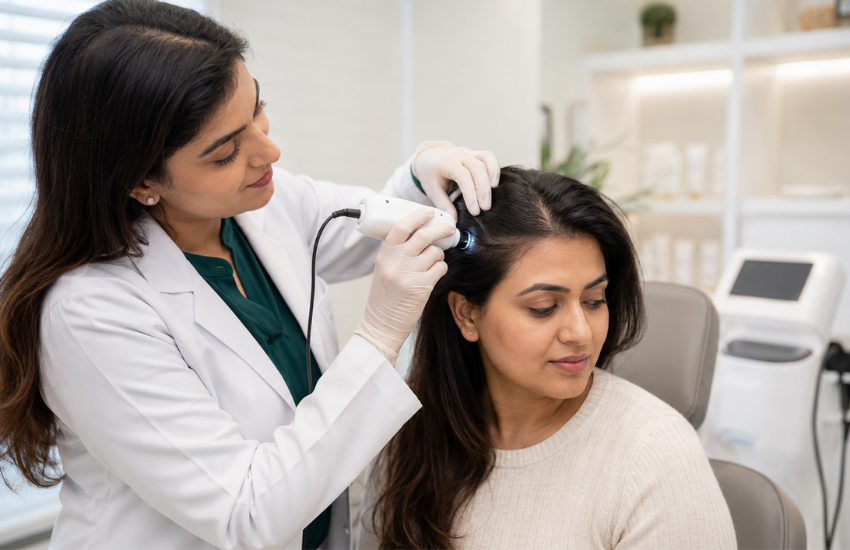
Our dermatologists take a comprehensive approach to hair and scalp concerns. We evaluate the pattern and duration of hair loss, examine the scalp and hair, review relevant medical and family history, and consider diet, stress, medications and hair-care practices. Based on the diagnosis, a personalised treatment plan is recommended to address the underlying cause and support healthier hair and scalp.
Understanding Hair Fall
Some amount of daily hair shedding is normal because individual hairs naturally move through different stages of growth and rest. However, noticeably increased shedding, progressive thinning or the appearance of visible scalp may indicate excessive hair loss.
Hair loss can occur in several patterns. Some people experience diffuse shedding across the scalp, while others develop thinning mainly around the hairline, crown or parting. In some conditions, clearly defined patches of hair loss may develop.
The pattern of hair loss provides important clues about its cause. A detailed dermatological assessment can help distinguish temporary shedding from conditions that may require long-term treatment.
Common Causes of Hair Fall
Hair loss can have a wide range of causes, including:
- Nutritional deficiencies.
- Hormonal changes.
- Thyroid or other medical conditions.
- Significant physical or emotional stress.
- Recent illness, fever or surgery.
- Rapid weight loss or restrictive diets.
- Certain medications.
- Genetic or hereditary factors.
- Scalp infections or inflammatory conditions.
- Excessive hairstyling or chemical treatments.
- Certain autoimmune conditions.
In some patients, more than one factor may be contributing to hair loss. For example, a person may have an underlying genetic tendency to thinning while also experiencing increased shedding after stress or nutritional deficiency.
Hair Loss After Stress or Illness
Increased hair shedding may sometimes develop several weeks or months after a significant physical or emotional event. This can occur following a severe illness, high fever, major surgery, substantial weight loss, intense stress or other physiological changes.
This type of shedding may be temporary, and hair growth can improve once the underlying trigger is addressed. However, persistent or severe hair loss should still be evaluated to rule out other causes.
Our dermatologists assess the timing of the shedding in relation to recent events and determine whether additional investigation or treatment is appropriate.
Genetic and Pattern Hair Loss
Genetic hair loss is one of the most common causes of progressive hair thinning in both men and women. It often develops gradually and may follow a characteristic pattern.
In men, thinning may become noticeable around the temples, hairline or crown. In women, thinning may be more apparent around the central parting and crown while the frontal hairline may remain relatively preserved.
Early assessment can be useful because treatment may be more effective when started before significant permanent loss has occurred. Management depends on the patient's age, pattern of hair loss, severity and individual circumstances.
Hair Fall in Women
Women may experience hair shedding or thinning for many different reasons. Hormonal changes, pregnancy and the postpartum period, nutritional deficiencies, thyroid disorders, stress, certain medications and genetic factors may all contribute.
A detailed history is particularly important because the pattern and timing of hair loss can provide clues about its underlying cause. Where appropriate, the dermatologist may recommend investigations to identify nutritional, hormonal or medical factors contributing to the problem.
Treatment is then tailored to the specific diagnosis rather than treating hair fall as a single condition.
Hair Fall in Men
Men commonly experience hereditary pattern hair loss, although other causes of shedding and thinning can also occur.
A dermatologist assesses the distribution and progression of thinning and checks for signs of scalp inflammation or other conditions. Treatment may include topical medications, oral medications or other therapies depending on the diagnosis and suitability of the patient.
Starting appropriate management early may help slow progression and preserve existing hair.
Hair Breakage
Hair breakage is different from hair loss from the root. With breakage, the hair shaft becomes weak and snaps, leading to shorter strands, split ends, uneven hair length and an overall appearance of thinning.
Common causes include:
- Frequent heat styling.
- Straightening or curling treatments.
- Bleaching and repeated colouring.
- Chemical treatments.
- Tight hairstyles.
- Excessive brushing or combing.
- Rough towel drying.
- Frequent washing with unsuitable products.
- Environmental exposure.
- Poor hair-care practices.
The scalp may appear normal even when the hair itself has sustained significant damage.
Managing Hair Breakage
Treatment for hair breakage focuses on protecting the hair shaft and reducing further damage. Patients may be advised to reduce the use of high-heat styling tools, avoid excessively tight hairstyles and handle wet hair gently.
Appropriate conditioners and hair-care products may help reduce friction and improve manageability. Chemical treatments should be spaced appropriately, particularly when the hair is already weak or damaged.
If breakage is severe or accompanied by scalp symptoms or hair thinning from the roots, dermatological evaluation is recommended to determine whether an underlying scalp or medical condition is also contributing.
Understanding Dandruff
Dandruff is a common scalp condition characterised by visible flakes and varying degrees of itching or irritation. It can affect people of different ages and may become more noticeable during certain seasons or periods of stress.
Dandruff is not simply a matter of poor hygiene. The scalp naturally contains microorganisms, including a type of yeast that can contribute to inflammation and flaking in susceptible individuals.
However, not every flaky scalp is dandruff. Dry skin, seborrhoeic dermatitis, psoriasis, eczema, fungal infections and other scalp conditions can produce similar symptoms.
Causes of Persistent Dandruff
Persistent dandruff may be associated with:
- Excess scalp oil.
- Increased sensitivity to naturally occurring scalp yeast.
- Dry or irritated skin.
- Seborrhoeic dermatitis.
- Psoriasis.
- Certain hair-care products.
- Environmental changes.
- Stress and other individual triggers.
Determining the cause helps ensure that treatment is appropriate. Simply using a generic anti-dandruff product may not be sufficient if another scalp condition is responsible.
Treatment for Dandruff
Treatment depends on the underlying cause and severity of the condition. Medicated shampoos may be recommended to reduce flaking and control the organisms or inflammation associated with dandruff.
Depending on the diagnosis, treatment may involve antifungal ingredients, anti-inflammatory medications, keratolytic treatments or other scalp therapies. The frequency and duration of use depend on the specific product and the patient's condition.
Patients should follow the dermatologist's instructions regarding how often to use medicated products and how long they should remain on the scalp before rinsing.
Dandruff Versus Seborrhoeic Dermatitis
Dandruff and seborrhoeic dermatitis are closely related but are not always identical. Seborrhoeic dermatitis can cause more significant inflammation, redness, itching and greasy or thick scaling.
It may also affect areas other than the scalp, including the eyebrows, sides of the nose, ears, beard area and other regions with a higher concentration of oil-producing glands.
When symptoms are persistent or extend beyond the scalp, professional assessment can help determine whether a more comprehensive treatment plan is required.
Scalp Psoriasis and Other Conditions
Scalp psoriasis can sometimes be mistaken for severe dandruff because it can produce prominent scaling and itching. However, the treatment approach can be very different.
Other scalp conditions, including eczema, fungal infections and inflammatory disorders, may also produce flaking or hair loss. A dermatologist can examine the scalp and distinguish between these conditions based on their appearance and clinical features.
Correct diagnosis is particularly important when symptoms do not respond to conventional dandruff treatments.
Detailed Assessment of Hair and Scalp
During a consultation, our dermatologists review the patient's overall health, hair-care routine and history of hair loss. The assessment may include questions about:
- When the hair fall or breakage began.
- Whether shedding is sudden or gradual.
- The pattern and distribution of thinning.
- Recent illness, surgery or significant stress.
- Dietary habits and recent weight changes.
- Menstrual or hormonal changes where relevant.
- Current medications and supplements.
- Family history of hair loss.
- Hair colouring, straightening or other chemical treatments.
- Frequency of heat styling.
- Tight hairstyles or hair extensions.
- Scalp itching, scaling, redness or pain.
The scalp and hair are then examined to identify the pattern of hair loss, hair-shaft damage and signs of inflammation or infection.
Investigations for Hair Loss
Not every patient with hair loss requires laboratory testing. However, investigations may be recommended when the history or examination suggests an underlying nutritional, hormonal or medical cause.
Depending on the individual situation, the dermatologist may recommend appropriate blood tests or other investigations to evaluate possible contributing factors.
The purpose of testing is to identify treatable causes rather than prescribing supplements or medications without establishing whether they are actually needed.
Nutritional Support for Healthy Hair
Adequate nutrition is important for normal hair growth. Deficiencies in certain nutrients can contribute to hair shedding or impaired hair quality in some individuals.
If a nutritional deficiency is suspected or confirmed, dietary changes or supplementation may be recommended as appropriate. Patients should avoid taking high-dose supplements without medical advice, as excessive intake of certain nutrients can itself cause health problems and may not improve hair growth.
A balanced diet containing adequate protein, vitamins and minerals is generally an important foundation for overall hair health.
Medical Treatments for Hair Loss
Depending on the diagnosis, treatment for hair loss may include topical solutions, oral medications, nutritional correction or other dermatological therapies.
The choice of treatment depends on the type and severity of hair loss, the patient's age, medical history, medications, treatment goals and potential contraindications.
Some treatments are intended to reduce ongoing hair loss, while others may support the growth of existing follicles. Results generally take time, and consistent use is often important for maintaining improvement.
Scalp Treatments
When the scalp itself is contributing to hair loss, treating the underlying scalp condition may be an important part of the management plan.
Inflammation, dandruff, seborrhoeic dermatitis, infection and other scalp disorders can interfere with healthy hair growth or cause increased shedding. Treating these conditions may help create a healthier scalp environment.
Scalp treatments may include medicated shampoos, topical medications, antifungal treatments or other therapies depending on the diagnosis.
Hair Care Recommendations
Daily hair-care habits can have a significant effect on hair breakage and overall hair quality. Patients may be advised to:
- Avoid excessive heat styling.
- Reduce frequent bleaching or harsh chemical treatments.
- Avoid very tight hairstyles.
- Use a suitable conditioner.
- Handle wet hair gently.
- Avoid aggressive brushing or combing.
- Use hair products appropriate for the individual's scalp and hair type.
- Protect the hair from unnecessary mechanical and chemical damage.
These measures do not replace medical treatment for hair loss, but they can help minimise preventable breakage.
Realistic Expectations From Hair Treatment
Hair growth is a gradual process, and improvement cannot usually be expected immediately. The time required to see a change depends on the underlying cause, duration of the problem and treatment selected.
Some forms of hair shedding are temporary and may improve after the underlying trigger is corrected. Other forms, particularly genetic hair loss, may require ongoing treatment to maintain results.
Our dermatologists discuss expected timelines and treatment limitations so that patients understand what can realistically be achieved.
When Should You See a Dermatologist?
A dermatological consultation is recommended if hair shedding is sudden, excessive or persistent, particularly when there is visible thinning or loss of hair density.
Professional evaluation is also advisable if hair loss occurs in distinct patches, is accompanied by scalp pain or inflammation, or develops alongside significant scaling or other scalp symptoms.
For dandruff, consultation may be helpful when symptoms are persistent, severe, associated with redness or thick scaling, or do not improve with appropriate over-the-counter care.
Early diagnosis can help identify treatable causes and prevent unnecessary delay in managing progressive hair loss.
Personalised Hair and Scalp Care
There is no single treatment that works for every type of hair fall, breakage or dandruff. The same symptom may have very different causes in different patients.
Our dermatologists therefore develop personalised treatment plans based on the patient's diagnosis, scalp condition, lifestyle, hair-care practices, nutritional factors, medical history and family history.
The plan may combine medical treatment with scalp care, nutritional guidance and practical changes to hair-care habits. Follow-up appointments can be used to monitor progress and adjust treatment when required.
Conclusion
Hair fall, hair breakage and dandruff can have a significant effect on appearance, confidence and quality of life, but these concerns can often be managed more effectively once their underlying causes are identified.
Our approach begins with a detailed assessment rather than relying on generic hair products or supplements. We consider nutritional, hormonal, genetic, medical, scalp-related and lifestyle factors to understand why the problem is occurring.
Depending on the diagnosis, treatment may include topical or oral medication, medicated scalp treatments, nutritional guidance and changes to hair-care practices. For persistent dandruff, we determine whether the symptoms are related to dryness, fungal overgrowth, seborrhoeic dermatitis, psoriasis or another scalp condition before recommending treatment.
With an accurate diagnosis, personalised care and consistent follow-up, many hair and scalp concerns can be improved or effectively managed. Our goal is to support healthier hair growth, reduce preventable hair damage, control scalp conditions and provide patients with a practical long-term approach to maintaining scalp and hair health.