- Email: unityhospital24x7@gmail.com
- Badarpur, New Delhi-110044
- Call: +91-9958749840
- Call: 011-69139900
Mon - Sun (24*7)

Hair Transplant
Hair Transplant
- Unity Hospital
Hair loss and baldness can have a significant impact on appearance, confidence and quality of life. While medications and other non-surgical treatments may help control certain types of hair loss, some patients with significant or progressive hair thinnin
Hair loss and baldness can have a significant impact on appearance, confidence and quality of life. While medications and other non-surgical treatments may help control certain types of hair loss, some patients with significant or progressive hair thinning may prefer a longer-lasting solution. Hair transplantation is a surgical procedure that redistributes healthy hair follicles from a donor area to areas affected by thinning or baldness.
Our hair transplant team uses modern transplantation techniques with a focus on natural-looking results, appropriate hairline design and careful graft placement. The process begins with a detailed consultation to determine the cause and pattern of hair loss, assess the quality and availability of donor hair and understand the patient's expectations.
Because a successful transplant depends on both the availability of suitable donor follicles and appropriate planning, not every patient is an ideal candidate. A careful assessment allows the specialist to determine whether transplantation is suitable and, if so, develop a treatment plan that is appropriate for the patient's current hair loss and future needs.
Understanding Hair Transplantation
A hair transplant involves moving hair follicles from an area of the scalp where hair growth is relatively resistant to hair loss to areas where the hair has become thin or absent.
The transplanted follicles continue to grow hair after they have successfully established themselves in their new location. Because the patient's own hair follicles are used, the transplanted hair can blend naturally with the existing hair when the procedure is properly planned and performed.
The aim is not simply to add as many grafts as possible. A successful procedure should create an appropriate balance between coverage, density, hairline design and preservation of the donor area.
Who May Be Suitable for a Hair Transplant?
Hair transplantation may be considered for patients experiencing certain types of permanent or progressive hair loss, particularly when sufficient healthy donor hair is available.
Suitability depends on several factors, including:
- The cause and pattern of hair loss.
- The extent and progression of baldness.
- The density and quality of donor hair.
- The characteristics of the patient's hair.
- The stability of existing hair loss.
- The condition of the scalp.
- The patient's age and overall health.
- Previous hair restoration procedures.
- Realistic expectations regarding the final result.
A consultation is essential because having hair loss does not automatically mean that transplantation is the best treatment option.
Initial Consultation and Assessment
The first step is a detailed consultation with the hair transplant specialist. The doctor examines the scalp and evaluates the pattern of thinning or baldness.
The assessment may include a review of:
- When the hair loss began.
- Whether hair loss is progressing.
- Previous hair-loss treatments.
- Family history of baldness.
- The density of hair in the donor area.
- Hair calibre and quality.
- Scalp health.
- Existing scars or previous procedures.
- Current medications and medical conditions.
- The patient's expectations and desired outcome.
This information helps determine whether transplantation is appropriate and how the procedure should be planned.
Evaluating the Donor Area
The donor area is one of the most important factors in hair transplantation. It generally refers to parts of the scalp that retain stronger hair growth and can provide follicles for transplantation.
The specialist evaluates donor density, hair calibre and the amount of usable donor hair. The available donor supply is limited, so it needs to be managed carefully.
Overharvesting the donor area can result in visible thinning or an unnatural appearance. For this reason, graft allocation is planned strategically, taking into account both current hair loss and the possibility of future progression.
Hairline Design
Hairline design plays a major role in creating a natural-looking hair transplant. A hairline that is too low, too straight or poorly positioned can appear artificial, particularly as a patient ages.
Our specialists consider factors such as facial proportions, age, existing hairline characteristics, hair density and the likely future pattern of hair loss when planning the hairline.
The objective is to create a hairline that complements the patient's facial features while maintaining a natural appearance over time.
Choosing the Appropriate Transplant Technique
Different hair transplantation techniques may be appropriate for different patients. The choice depends on donor hair characteristics, the number of grafts required, the area being treated and other individual factors.
Modern transplantation approaches generally aim to harvest and place individual follicular units with careful attention to their natural direction and orientation.
The specialist will explain the recommended technique during consultation and discuss why it is appropriate for the patient's particular pattern of hair loss.
Follicular Unit Extraction
Follicular Unit Extraction, commonly referred to as FUE, involves extracting individual follicular units from the donor area and preparing them for placement in areas of thinning or baldness.
The grafts are carefully selected and implanted according to the planned hairline and density requirements. Because the follicles are placed individually, the specialist can control their direction and positioning to create a natural appearance.
FUE is widely used in modern hair restoration and may be suitable for patients who prefer a procedure that does not involve a long linear donor-area incision.
Graft Placement and Natural Hair Direction
The way grafts are placed is as important as the number of grafts used. Natural hair grows at different angles and directions across different parts of the scalp.
During transplantation, the specialist carefully considers the direction, angle and distribution of existing hair. Fine grafts may be used toward the front of the hairline, while greater density can be created behind the hairline where appropriate.
This detailed placement helps the transplanted hair blend with the patient's existing hair and reduces the likelihood of an artificial appearance.
The Hair Transplant Procedure
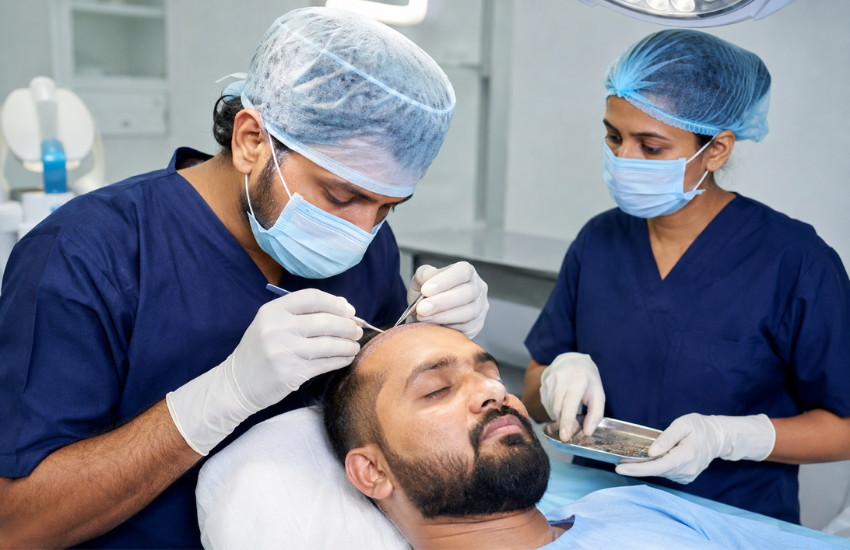
On the day of the procedure, the scalp is prepared and local anaesthesia is generally used to minimise discomfort during treatment.
The donor follicles are carefully harvested according to the planned technique. The grafts are then prepared and sorted before being placed into the recipient areas.
The duration of the procedure depends on the number of grafts required, the size of the treatment area and the technique being used. Larger procedures may take several hours and may sometimes be divided into stages depending on the treatment plan.
Throughout the procedure, careful attention is given to preserving the quality of the grafts and placing them according to the pre-planned design.
Is Hair Transplantation Painful?
Hair transplantation is generally performed under local anaesthesia, which significantly reduces discomfort during the procedure. Patients may experience some pressure, mild sensations or brief discomfort during the administration of anaesthetic.
After the procedure, some tenderness, tightness or sensitivity may occur in the treated areas. The specialist provides appropriate aftercare instructions and medication recommendations where required to make the recovery period as comfortable as possible.
Individual experiences vary depending on the extent of the procedure and personal sensitivity.
Recovery After a Hair Transplant
Recovery varies between patients. Mild redness, swelling, tenderness or small crusts may occur in the treated areas during the early healing period.
Patients receive detailed instructions regarding washing the scalp, sleeping position, physical activity and protection of the transplanted area. Following these instructions carefully can help support proper healing and reduce the risk of damaging newly transplanted grafts.
Most patients can gradually return to normal activities according to the guidance provided by their specialist.
Hair Growth After Transplantation
Hair transplantation does not produce immediate visible growth. The transplanted follicles require time to settle and enter their normal growth cycle.
It is common for some of the newly transplanted hair shafts to shed during the early period after the procedure. This does not necessarily mean that the transplant has failed, as the follicle can remain in place and subsequently produce new hair.
New growth generally develops gradually over the following months, with improvement becoming increasingly noticeable as the hair matures.
When Can You Expect Results?
Hair growth after transplantation is a gradual process. Early changes may be subtle, and the final appearance can take many months to develop.
The rate of growth varies between individuals and depends on factors such as follicle characteristics, the extent of transplantation, overall health and the patient's natural hair-growth cycle.
Patients should therefore have realistic expectations and understand that the final result should be assessed over an appropriate period rather than immediately after the procedure.
Maintaining the Results
A hair transplant can provide a long-lasting improvement in the transplanted areas, but it does not necessarily stop the progression of hair loss in the patient's original, non-transplanted hair.
For this reason, some patients may benefit from ongoing medical treatment to help preserve existing hair. The need for maintenance treatment depends on the cause and pattern of hair loss and should be discussed with the dermatologist or hair restoration specialist.
Long-term planning is particularly important for younger patients or those with progressive genetic hair loss.
Natural-Looking Results
A natural-looking result depends on more than simply increasing hair density. Hairline design, graft selection, follicle direction, spacing and the relationship between transplanted and existing hair all contribute to the final appearance.
Our specialists aim to create results that complement the patient's facial structure and look appropriate as the patient ages. Rather than creating an excessively dense or low hairline, the treatment plan is designed around the patient's available donor resources and long-term needs.
Hair Transplantation for Different Patterns of Hair Loss
Hair transplantation can be considered for different areas depending on the patient's pattern of hair loss. Treatment may address:
- Receding hairlines.
- Frontal hair thinning.
- Crown or vertex thinning.
- Reduced density across the mid-scalp.
- More extensive areas of baldness.
- Certain cases of eyebrow or other hair loss where transplantation is appropriate.
The amount of coverage achievable depends largely on the availability and quality of donor follicles.
What Happens If Donor Hair Is Limited?
The amount of donor hair available is naturally limited. If donor density is low or the area of baldness is extensive, it may not be possible to achieve complete coverage or very high density.
In such cases, the specialist may recommend prioritising areas that have the greatest effect on overall appearance, such as the frontal hairline and mid-scalp. The treatment plan should make efficient use of available grafts while maintaining a natural donor area.
If transplantation is unlikely to provide a satisfactory result, alternative hair-loss treatments may be discussed.
Risks and Possible Complications
Hair transplantation is generally considered a well-established surgical procedure, but like any medical procedure, it carries potential risks.
Temporary redness, swelling, tenderness, crusting and itching can occur during the healing period. Less commonly, patients may experience infection, scarring, changes in sensation, poor graft survival or an unsatisfactory cosmetic result.
There may also be temporary shedding of surrounding hair following the procedure. A detailed consultation allows the specialist to discuss these potential risks and explain how they can be minimised.
Importance of Post-Procedure Care
Aftercare plays an important role in protecting newly transplanted grafts and supporting the healing process.
Patients may receive instructions regarding:
- How and when to wash the scalp.
- How to protect the transplanted area.
- When to resume exercise and strenuous activity.
- Avoiding unnecessary rubbing or scratching.
- Sun protection.
- Medications or topical products recommended during recovery.
- Follow-up appointments.
Following these instructions carefully can help promote a smooth recovery and protect the investment made in the procedure.
Realistic Expectations From Hair Transplantation
Hair transplantation can significantly improve the appearance of areas affected by hair loss, but it is important to maintain realistic expectations. The procedure cannot recreate unlimited hair density, and the final outcome depends on the amount and quality of available donor hair.
Some patients may require more than one procedure over their lifetime, particularly if genetic hair loss continues to progress. The specialist will discuss the expected level of coverage and density before treatment.
Our goal is to provide an honest assessment rather than promise an unrealistic outcome.
Personalised Hair Restoration Planning
Every patient's hair loss pattern is different. The ideal hairline, number of grafts, donor area and treatment strategy must therefore be determined individually.
Our specialists create a personalised plan based on the patient's current hair loss, donor capacity, facial characteristics, age, future hair-loss pattern and expectations. This approach helps ensure that the procedure is planned not only for immediate cosmetic improvement but also for long-term suitability.
Conclusion
Hair transplantation can provide a lasting solution for selected patients experiencing significant hair thinning or baldness. By relocating healthy follicles from the donor area to areas affected by hair loss, the procedure can restore coverage and improve the overall appearance of the scalp.
The foundation of a successful transplant is careful assessment and realistic planning. Our specialists evaluate the cause and extent of hair loss, donor hair availability and individual expectations before recommending treatment. Hairline design, graft selection and precise placement are carefully planned to create a natural appearance that remains appropriate as the patient ages.
With modern transplantation techniques, personalised surgical planning and proper post-procedure care, patients can achieve meaningful and natural-looking hair restoration. Our focus is on creating results that are aesthetically balanced, medically appropriate and designed with the patient's long-term hair health in mind.