.png)
- Email: unityhospital24x7@gmail.com
- Badarpur, New Delhi-110044
- Call: +91-9958749840
- Call: 011-69139900
Mon - Sun (24*7)

Diabetes and Pregnancy: Managing Gestational Diabetes Safely
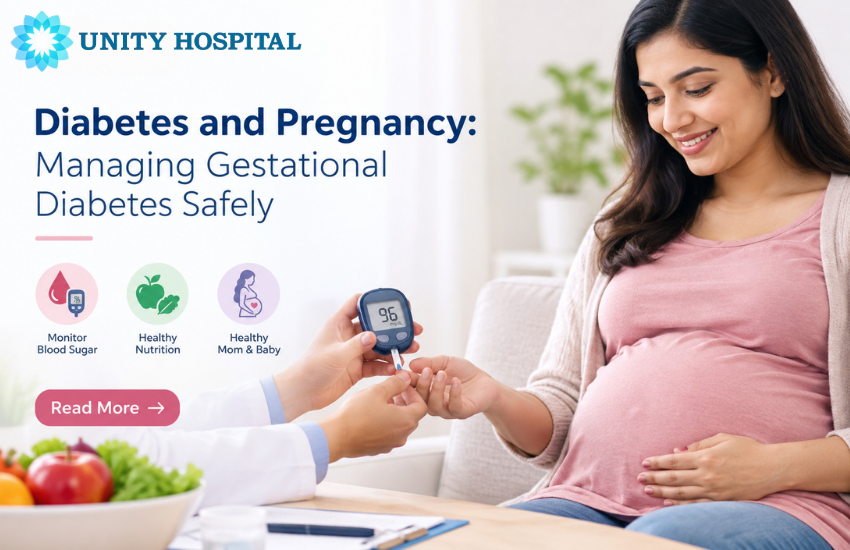
Diabetes and Pregnancy: Managing Gestational Diabetes Safely
- 25 Sep, 2026
- Unity Hospital
Learn how to manage gestational diabetes safely during pregnancy with diet.
Introduction
Pregnancy brings many physical and hormonal changes, and maintaining healthy blood sugar levels is an important part of prenatal care. Gestational diabetes is a type of diabetes that develops during pregnancy and can affect women who did not have diabetes before becoming pregnant. With regular monitoring, a balanced lifestyle, and appropriate medical care, gestational diabetes can usually be managed safely.
For pregnant women experiencing concerning symptoms such as severe weakness, excessive vomiting, confusion, or unusually high blood sugar levels, knowing where to seek urgent medical assistance is important. Searching for the best emergency hospital in Delhi can help families identify facilities that provide prompt assessment and emergency support when required.
What Is Gestational Diabetes?
Gestational diabetes occurs when the body cannot produce or effectively use enough insulin to maintain normal blood glucose levels during pregnancy. Pregnancy hormones can increase insulin resistance, making it harder for the body to control blood sugar.
It commonly develops during the second or third trimester and is usually detected through blood glucose testing recommended by the doctor. Women with risk factors may require earlier or more frequent testing.
Common Symptoms of Gestational Diabetes
Gestational diabetes may not cause noticeable symptoms, which is why routine pregnancy screening is important. When symptoms occur, they may include:
- Increased thirst
- Frequent urination
- Increased hunger
- Unusual tiredness
- Blurred vision
These symptoms can also occur during a normal pregnancy, so proper testing is necessary for diagnosis. If symptoms become sudden or severe, a Best Emergency hospital in Delhi may provide immediate evaluation and appropriate medical support.
Why Managing Blood Sugar Matters During Pregnancy
Uncontrolled blood sugar can increase the risk of complications for both the mother and baby. Possible concerns include excessive fetal growth, high blood pressure during pregnancy, difficult delivery, premature birth, and low blood sugar in the newborn.
Good glucose control can help reduce these risks. Pregnant women should follow their healthcare provider's recommendations for blood sugar monitoring, nutrition, physical activity, and medications when prescribed.
If blood glucose becomes difficult to control or symptoms become concerning, contacting a healthcare professional promptly is essential. An established Best Emergency hospital in Delhi can provide urgent assessment when routine medical appointments are not sufficient.
Healthy Eating During Pregnancy
A balanced diet is one of the foundations of gestational diabetes management. Instead of skipping meals, pregnant women should generally follow a consistent meal schedule recommended by their healthcare provider.
Choose nutrient-rich foods such as:
- Vegetables and salads
- Whole grains and high-fiber foods
- Lean proteins
- Eggs, pulses, and beans
- Low-fat dairy products
- Fresh fruits in appropriate portions
- Healthy sources of fats
Limit foods high in added sugar, including sugary beverages, sweets, desserts, and highly processed snacks. Portion control and carbohydrate distribution throughout the day can also help maintain more stable blood glucose levels.
A Best Emergency hospital in Delhi can also be relevant when dietary management is accompanied by an acute medical concern requiring immediate attention.
Physical Activity and Gestational Diabetes
For many pregnant women, safe physical activity can support blood sugar management. Walking, prenatal exercises, and other pregnancy-appropriate activities may help improve insulin sensitivity.
However, exercise recommendations should be individualized. Women with pregnancy complications or medical restrictions should consult their obstetrician before starting or changing an exercise routine.
Monitoring Blood Sugar
Regular blood glucose monitoring helps doctors understand how well gestational diabetes is being controlled. Depending on the individual situation, women may be advised to check blood sugar at specific times, such as before meals or after eating.
Keeping a record of blood sugar readings, meals, physical activity, and symptoms can help the healthcare team adjust the management plan.
If blood sugar readings are repeatedly outside the recommended range, medical advice should be sought rather than changing medication independently. For urgent symptoms or serious concerns, a Best Emergency hospital in Delhi may be appropriate for immediate assessment.
When Is Emergency Care Needed?
Most cases of gestational diabetes can be managed through planned prenatal care. However, urgent medical attention may be necessary if a pregnant woman develops severe vomiting, difficulty breathing, fainting, confusion, severe abdominal pain, heavy bleeding, or other alarming symptoms.
A Best Emergency hospital in Delhi should have emergency services capable of evaluating pregnant women and coordinating care when complications require immediate attention.
Pregnant women should also follow their doctor's instructions regarding warning signs, blood sugar targets, medications, and hospital visits. Emergency care should not replace regular antenatal check-ups.
Preparing for a Healthy Pregnancy
Managing gestational diabetes is a team effort involving the pregnant woman, obstetrician, diabetes specialist when required, nutrition professional, and other healthcare providers. Regular prenatal visits allow doctors to monitor the mother's health, baby's growth, blood pressure, and blood glucose control.
If an urgent situation occurs, knowing the location of a Best Emergency hospital in Delhi in advance can help reduce delays in seeking care.
With early detection and appropriate management, many women with gestational diabetes complete their pregnancies successfully and deliver healthy babies. Following medical advice, maintaining a balanced diet, staying appropriately active, and monitoring blood sugar can make pregnancy safer and more manageable.
For families looking for a Best Emergency hospital in Delhi, it is useful to consider emergency availability, maternity support, diagnostic facilities, specialist access, and the ability to provide timely medical assessment.
Conclusion
Gestational diabetes requires attention, but it does not mean that a healthy pregnancy is impossible. Regular screening, blood sugar monitoring, nutritious meals, appropriate physical activity, and consistent prenatal care are important parts of management. Women should never ignore severe or unusual symptoms and should seek immediate medical attention when necessary.
Choosing the best emergency hospital in Delhi for urgent situations can provide access to timely evaluation and emergency medical care when it is needed. Always follow your obstetrician's personalized recommendations throughout pregnancy.
FAQs
1. Can gestational diabetes affect the baby?
Yes. Poorly controlled blood sugar can increase certain pregnancy and newborn risks, so regular monitoring is important.
2. Can gestational diabetes be controlled with diet?
Some women can manage it with dietary changes and physical activity, while others may require medication prescribed by their doctor.
3. When is gestational diabetes usually diagnosed?
Screening is commonly performed during the second trimester, although testing may be recommended earlier for women with certain risk factors.
4. Does gestational diabetes go away after delivery?
Blood sugar often returns to normal after pregnancy, but women who develop gestational diabetes have a higher future risk of type 2 diabetes and should follow recommended postpartum testing.
5. When should I seek emergency care?
Seek urgent medical attention for serious symptoms such as fainting, confusion, difficulty breathing, heavy bleeding, severe abdominal pain, or other emergency warning signs.

Unity Hospital
Thank you for reading our latest article. For more information, please contact us.
.png)
.png)