
- Email: unityhospital24x7@gmail.com
- Badarpur, New Delhi-110044
- Call: +91-9958749840
- Call: 011-69139900
Mon - Sun (24*7)

Laparoscopic Surgery vs. Open Surgery
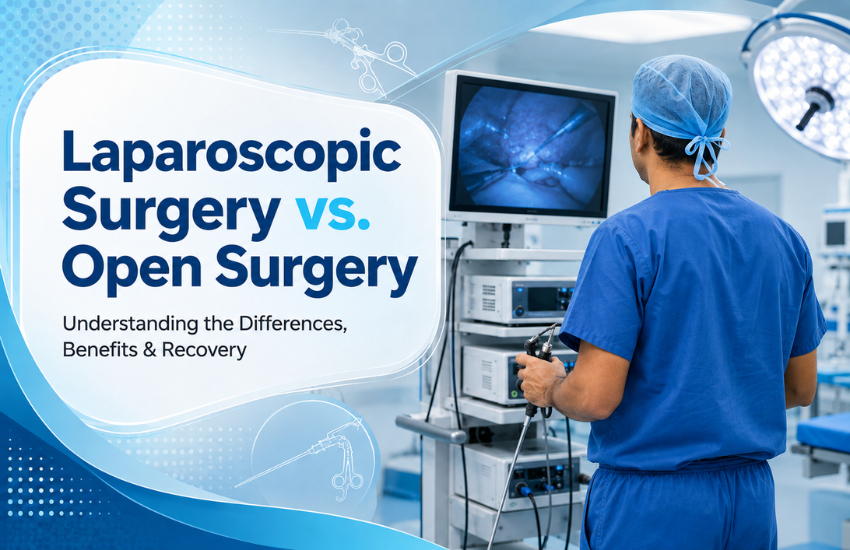
Laparoscopic Surgery vs. Open Surgery
- 24 Aug, 2026
- Unity Hospital
When it comes to surgical treatment for conditions like gallstones, hernia, or appendicitis, patients today have more than one option — traditional open surgery and modern laparoscopic (keyhole) surgery. Understanding the difference can help you make an informed decision alongside your doctor.
When it comes to surgical treatment for conditions like gallstones, hernia, or appendicitis, patients today have more than one option — traditional open surgery and modern laparoscopic (keyhole) surgery. Understanding the difference can help you make an informed decision alongside your doctor.
What is Laparoscopic Surgery? Laparoscopic surgery is a minimally invasive technique where surgeons operate through small incisions using a camera and specialised instruments, instead of making one large cut. At Unity Multi Speciality Hospital, our surgical team, led by Dr. Amit Khandelwal, with 25 years of experience, has performed hundreds of successful laparoscopic procedures, including gallbladder removal, hernia repair, and appendix surgery.
Key Benefits of Laparoscopic Surgery:
- Smaller incisions, minimal scarring
- Less post-operative pain
- Shorter hospital stay
- Faster return to daily activities
- Lower risk of infection
When is Open Surgery Still Necessary? While laparoscopic surgery is preferred in most cases, certain complex or emergency conditions may still require traditional open surgery for the safest outcome. Your surgeon will evaluate your specific case, medical history, and the complexity of the condition before recommending the right approach.
Conditions Commonly Treated with Laparoscopic Surgery at Unity Multi Speciality Hospital:
- Gallbladder stones
- Hernia (inguinal, umbilical)
- Appendicitis
- Varicocele
The Bottom Line: If you've been advised surgery for a gallbladder, hernia, or appendix issue, laparoscopic treatment could mean a faster, less painful recovery. Consult our surgical experts at Unity Multi Speciality Hospital to understand which approach is best suited for your health needs.
Book a consultation with Dr. Amit Khandelwal today.

Unity Hospital
Thank you for reading our latest article. For more information, please contact us.